Building Healthier Futures: Nyabihele Hamlet’s Journey to Accessible Family Planning.
In Kabare Village, Gwarama Ward of Kakonko District, access to family planning services has long been a challenge. The local mission health facility often experiences stock-outs, and when supplies are available, services come at a cost many low-income women cannot afford. For young mothers with multiple children, these barriers make it difficult to space pregnancies, putting both maternal and child health at risk.
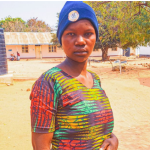
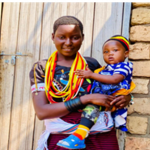
Monica Majuto, a 23-year-old single mother of four, embodies the struggles faced by many women in rural communities. Raising her children alone while sustaining her family through small-scale farming, Monica had previously relied on Implanon implants. However, frequent shortages and unaffordable fees prevented her from continuing with this method.
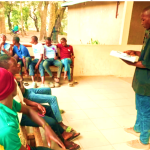
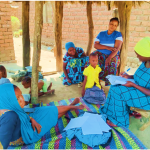
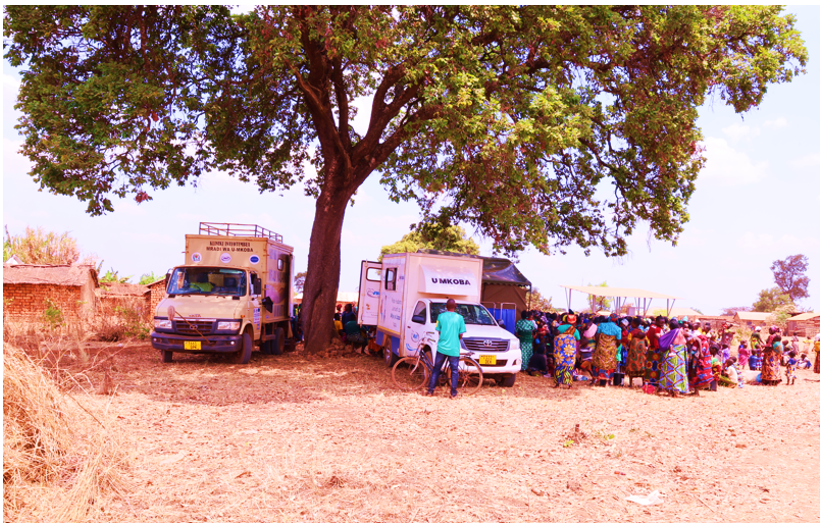
In December 2025, hope arrived when a mobile clinic visited Nyabihele Hamlet to provide sexual and reproductive health services. Monica attended the session, where she received health education, counseling, and the opportunity to discuss her family planning goals. She was then offered an Implanon implant free of charge.
“I tried Implanon before, but sometimes the clinic had nothing, and when it was available, I couldn’t afford it,” Monica shared. With relief and gratitude, she welcomed the convenience, quality, and affordability of the mobile clinic’s services, and expressed her wish for regular visits to her community.
With renewed access to family planning, Monica can now space her pregnancies, regain her health, and continue farming to support her children. “I want to give my body time to rest before having another child, and I’m so happy this service is free and right here in my village,” she said.
Her story illustrates how mobile clinics empower women to make informed reproductive choices, improve maternal and child health outcomes, and strengthen community trust in healthcare services.
Mobile clinics are bridging critical gaps in rural health delivery. By offering targeted counseling, free services, and consistent follow-up, they ensure that women like Monica are not left behind. As Monica herself put it: “I wish the mobile clinic comes often. This service is life-changing for women like me.”
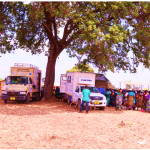
Group of community members waiting for service in the UMKOBA Mobile Van During an outreach program
Monica’s experience demonstrates the transformative power of mobile family planning services. By bringing care directly to underserved communities, we are not only improving health outcomes but also giving women the tools to plan their futures with dignity and confidence.