From Margins to Movement: Boys Champion Menstrual Hygiene
In Mamba ward, Mpimbwe Council, a group of out of school boys often overlooked and underestimated started something quietly powerful. Without the structure of classrooms, they found a surprising purpose: standing up for menstrual hygiene.
These boys, aged between 10 and 24, are part of the local community and regularly join peer education sessions led by Helman Nyembe, a 24 years old Youth Peer Educator with the VUMA project at Mamba Health Facility. Helman meets with young people one on one and in groups, encouraging them to make smart choices about their sexual and reproductive health and to visit the health center’s for Youth Friendly Services.
What began as casual chats during football games, pool matches, and card playing quickly grew into meaningful conversations about health, respect, and equality. One session about menstrual hygiene really opened their eyes.
They learned that many girls in their community miss school during their periods, don’t have enough sanitary products, and face shamming and bullying.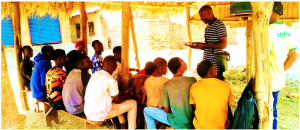 The boys were surprised at how significant menstruation affects girls daily lives, education and wellbeing in their community. “We didn’t know,” said Joseph John, 16. “We thought it was just a girls’ issue. But it’s a community issue.”
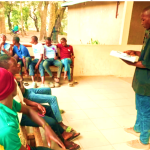
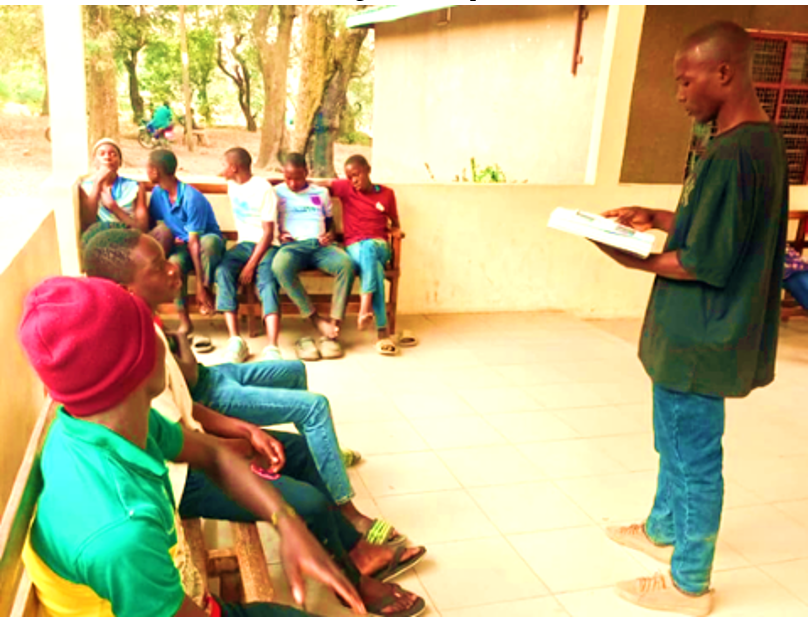
Helman Nyembe (YPE) standing conducting sessions to adolescents and young boys.
Youth Peer Educators are changing how their communities talk about periods and menstrual hygiene. They encourage parents to have open conversations with their children, helping both boys and girls understand that menstruation is normal and not shameful. This helps break myths, taboos and creates a more supportive environment for girls.
They also bring this message to places like football fields and pool tables, where they challenge myths, call out period shaming, and promote respect. Some boys have even started standing up against harmful cultural beliefs like isolating girls during their periods.
Beyond menstrual health, Youth Peer Educators guide their peers to make informed decisions about sexual and reproductive health, encouraging them to visit Mamba Health Center’s Youth Friendly Services for accurate information and support.  Their efforts are building a culture of openness, respect, and informed decision making. One young leader Jshua (17), says; “We may be out of School, but we are not out of ideas, we can still lead’’
Girls in the community now feel safer and more supported by boys regarding menstrual hygiene. Thanks to the Youth Peer Educators, more young people attend weekend clinics at the health facility for menstrual hygiene and sexual health services. These clinics have become a regular and popular space where youth gain confidence, skills, and a sense of belonging while learning and connecting.