From Hardship to Hope: How Neema Mchele Became a Champion for Teen Mothers in Kasekese Village, Katavi Region
After finishing Standard Seven, Neema Mchele left her village in Tanganyika District, Katavi Region, to look for work in town. She hoped for a better life, but at 17 she found herself pregnant and unable to afford to stay. She returned home to Kasekese with no income and little support.
Back in the village, Neema met an old childhood friend who had gone on to secondary school and learned  about sexual and reproductive health. Neema watched her friend calmly turn down boys who pressured her to have unprotected sex. It made her think about her own past relationship, when she had not felt able to insist on safe sex.
“I saw my friend say no without fear, and I realized I had never been able to do that,” Neema recalls. “I wanted to know who taught her and what gave her confidence.”
She learned the answer was the weekend clinic sessions run by the VUMA Project at Kasekese Health Centre. The girls in the village, including an out-of-school girl, had all attended
VUMA (Vijana na Ubora, Malengo na Afya) is implemented by UMATI and partners in Katavi Region with funding from Global Affairs Canada. The project helps adolescent girls and young women make free and informed decisions about their sexual and reproductive health and rights (SRHR), and works to improve the quality of the health and protection services available to them.
Her friend connected her to the project, and a VUMA-trained Community Health Worker (CHW) began visiting Neema at home. Throughout her pregnancy and into early motherhood, she received regular nutrition and SRH counseling. After her daughter was born, she began attending the Kasekese weekend clinics, where a friendly youth provider counseled her on birth spacing. Neema chose a modern contraceptive method and received it at the clinic.
“The health worker visited me at home, so I did not feel alone,” Neema says. “At the clinic, nobody judged me. I learned things I wish I had known before, and I made my own choice.”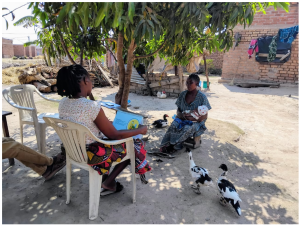
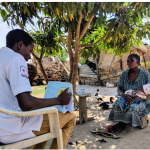
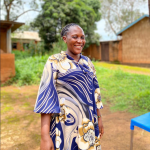
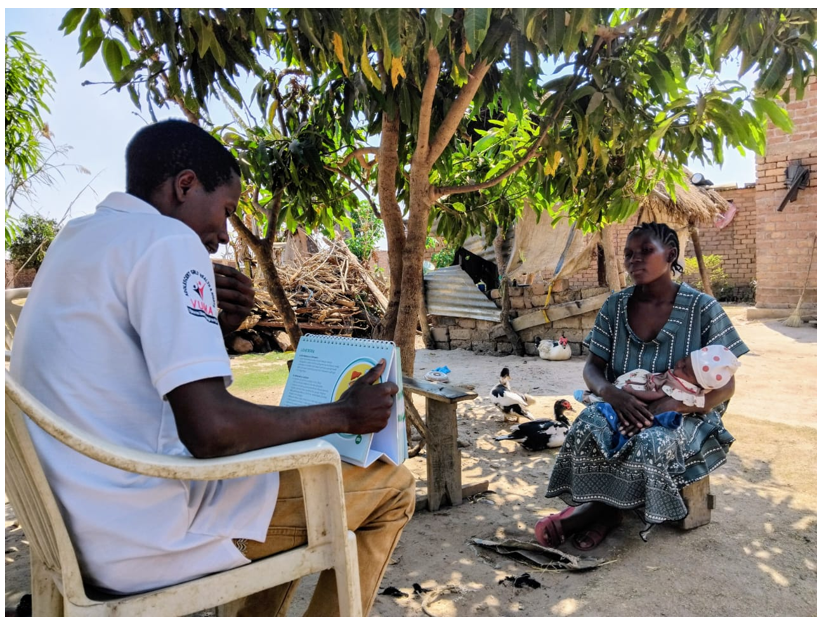
Photo caption: Left: Neema Mchele, holding her daughter, during a nutrition session with community health workers. Right: her friend, who first introduced her to VUMA.
Neema wanted to pass on what she had learned. When a peer educator position opened, VUMA enrolled her as a volunteer, and she brought her own experience into her work. Today she leads sessions at the Kasekese weekend clinics and at VUMA’s SRH sessions in local secondary schools. She teaches in-school students and out-of-school young people how to handle pressure in relationships, use condoms and prevent unplanned pregnancy, so that girls can stay in school and pursue their goals.
At first, some people in the village doubted that a young mother who had left school could teach others about relationships and health. Neema kept running her sessions and visiting girls at home, and over time more girls and parents began to trust her.
“I tell girls that they are allowed to say no, and that asking for help is not shameful,” she says. “I know what it is like to learn this too late.”
Neema also supports other young mothers in the village. She accompanies them to the clinic, shares what she learned about nutrition and birth spacing, and refers them to the CHW. Since joining VUMA, she has reached more than 130 young people through clinic sessions and school visits, including 12 young mothers.
“My story did not end when I got pregnant,” says Neema. “I want every girl here to know she still has a future.” She hopes to reach more girls in other villages with the information they need to make informed choices. 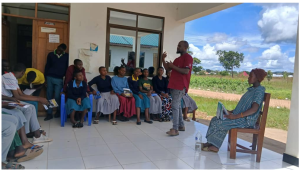
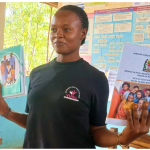
Mchele leading an interactive SRH education session with young girls during a weekend clinic at Kasekese Health Centre.