One Voice, Many Futures: Honoratha’s Message Across the Airwaves
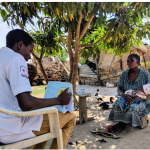
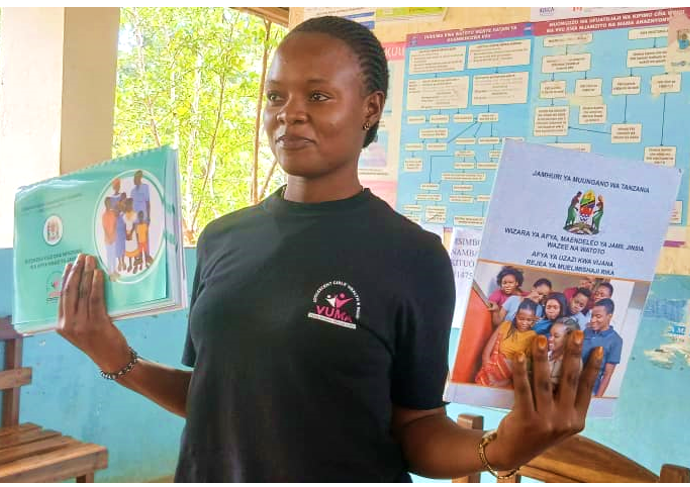
Honoratha Kasansa is one of the Youth Peer Educators at Town Health Centre in Makanyagio ward, Mpanda Municipal Council. She has been trained under the VUMA Project since 2023. She supports adolescents and youth during the Youth Weekend Clinic, where she welcomes them, guides them to services and ensures they feel safe and respected. Beyond the clinic, she visits households to meet youth and adolescents, holds one-on-one sessions, leads group discussions and walks through the streets to reach out-of-school adolescents, making sure no one is left behind.
Honoratha says, “Every adolescent and youth deserves a safe place to learn and grow.”
When I first started, it was not easy. Many parents had never seen a peer educator on household visits or talking about topics like sexual and reproductive health and rights, gender-based violence, early marriage, early pregnancy, menstrual health, or mental health. Some parents were hesitant. One mother told me, “Why would you talk about these things with our children? This is not for them.”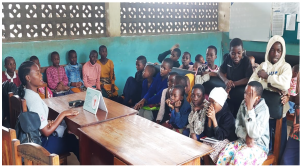
I had to explain my role, visit several times, and slowly build trust. Even the adolescents themselves were shy. They would whisper or avoid looking at me. I learned quickly that trust takes time.
Here are some of the experiences I have encountered during sessions with adolescents and youth.
I remember Ashura, a 17-year-old adolescent girl from Makanyagio ward. At first, she resisted, saying she was not sick and did not need a health facility. Patiently, I explained that health is not only about sickness, it is about rights, choices, and protection. When she finally attended a Youth Weekend Clinic, her eyes lit up with understanding. She began asking questions, and soon she was sharing what she learned with her friends. “Learning gives courage to try new things.”
Then there was Iddi, an 18-year-old. He was shy, avoiding family planning discussions because boys in his community are told those topics are for girls. I spoke gently, showing him that SRHR belongs to everyone. Slowly, he opened up. Later, he told me he felt proud to talk with his partner about safe choices. “When boys learn respect, everyone wins.”
I also met Rehema, a 15-year-old girl who missed school during her period. She believed menstruation was shameful. I explained to her about menstrual health and safe menstrual hygiene. Over time, she returned to school regularly and encouraged her younger sister to speak openly. Watching her confidence grow was one of the most emotional parts of my journey. “Speaking out brings back confidence.”
In every session, whether one-on-one, in groups, during household visits, or on the streets, I follow a sequence. I use my job aid to guide discussions on SRHR, family planning, GBV, early marriage, early pregnancy, menstrual hygiene, mental health, nutrition, child protection, and infection prevention and control. Step by step, 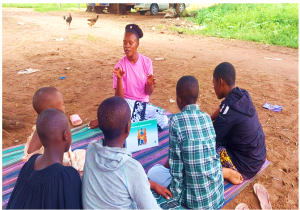 I build knowledge and courage. And when I meet adolescents or youth who need services, I make sure to refer them to the nearest health facility or to the YWC, where they can receive confidential and professional care and more accurate information.
I have continued to create and spread awareness among adolescents and youth through radio sessions that are part of the project, where project beneficiaries are invited to discuss different topics concerning adolescents and youth.
My journey does not stop at households or streets. As part of our project, I am invited as a speaker on radio programs. On air, my voice reaches adolescent girls and boys, in school and out of school, and the broadcasts extend further, touching the whole community. Parents, leaders, and neighbors listen too. One listener once asked if services could be accessed without parents knowing. A health worker explained that confidential services are available at the YWC or nearest health facility. In that moment, I realized the power of radio: one voice carried across the airwaves can spark change in many futures. “One voice can reach many hearts.”
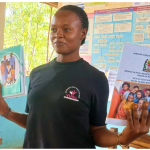
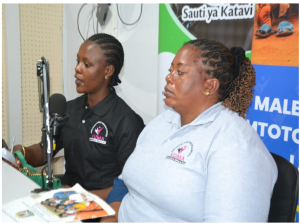 Honoratha, in the black T-shirt, with a health care worker (HCW) during a radio session on the sexual and reproductive health challenges facing adolescents and youth, at Mpanda FM, Mpanda Municipal Council.
In our culture, many families believe SRHR education and information should wait until marriage, or that girls should remain silent about their bodies. Boys are told emotions and mental health do not matter. Out-of-school girls face even heavier barriers, expected to accept early marriage or silence. But through one-on-one sessions, street visits, group sessions, and radio programs, I am helping to change these beliefs. I see girls gaining confidence to manage their menstrual health, boys learning to respect their partners, and communities beginning to understand that health, rights, and dignity belong to everyone. “Real change starts when people speak up.”
Every time I witness an adolescent take a step toward protecting herself from early pregnancy, early marriage, or violence, I feel hope. My journey is filled with challenges, but also victories, small sparks of change that grow into brighter futures. My dream is that all young people in my community, and beyond, will grow up informed, confident, and able to make their own safe health choices. I believe that when adolescents are free to decide about their bodies and their futures, without fear or violence, they can live with dignity and joy. “Freedom means choosing health, safety, and dignity.”
“When I see adolescents stand tall, informed, and confident, I know change is possible. My voice is just one, but together with theirs, we are building a future of dignity, health, hope, and freedom for adolescents to make safe health choices, free from violence. I thank the young people who trust me with their time, because their courage inspires mine.” —Honoratha